SUMMARY #7: pages 104-120
The journey to Buchenwald has made Eliezer's father very weak and close to death. Elizer leaves his father so that he could sleep. In the morning, he begins to search for his father, but halfheartedly. Part of Eliezer is thinking that he will be better off if he abandons his father and become concerned only with his survival. However, he finds his father, who is very sick and unable to move. Eliezer brings him soup and coffee, but feels that he should keep the food for himself to keep up his strength. You soon learn that Eliezer’s father continues to approach death. He is infected with an illness called dysentery, which makes him terribly thirsty. It is extremely dangerous to give water to a man with dysentery, but Eliezer gives him water anyways since his father pleads for it every time. The had of the block tells Eliezer that Eliezer should concentrate his energy on his own survival, and not his father's since he is already dying.
The next time the SS patrol the barracks, Eliezer’s father again cries for water, and the SS officer, screaming at Eliezer’s father to shut up, beats him in the head. On January 29, 1945, Eliezer wakes up to find that his father has been taken to the crematory. But instead of feeling sad, he is relieved.
On April 5, with the American army approaching, the Nazis decide to exterminate all the Jews left in the camp. Daily, thousands of Jews are murdered. On April 10, the Nazis decide to evacuate and kill everyone left in the camp. When it seems that all has returned to normal and that the evacuation will proceed as planned, the resistance movement strikes, driving the SS from the camp. Hours later, on April 11, the first American army tank arrives at Buchenwald. Everyone is finally free from the concentration camps. Soon, Eliezer is struck with food poisoning and spends weeks in the hospital. When Eliezer looks at his reflection in the mirror, he is shocked. “From the depths of the mirror, a corpse gazed back at me.”Wiesel writes. Eliezer has been through a lot that he didn’t even recognize his own reflection in the mirror. It was as if there was a completely different person staring back at him in the mirror. :O
THE END!
So guys, what did you think about the book Night? Did you find Eliezer's experience during the Holocaust interesting to read? (:
Thursday, February 11, 2010

Scene Setter #4
*Page 34
After Eliezer's father asked him if he remembered Mrs. Schachter in the train... he than remembered a lot of things that he would never forget. He sat there remembering all the things that he saw that he would never forget like; the first night in camp, the smoke, the small faces of the children whose body transformed into smoke, the flames that consumed his faith forever, the nocturnal silence that deprived him for all eternity of the desire to live, those moments that murdered his God and soul and turned his dreams to ashes, those things, even were he condemned to live as long as God himself.
Him being at that camp made him developed these memories that he would never forget because he saw them with his own eyes and it kind of scarred him for life.
Scene Setter #3
*Page 29
When everyone left the wagon, the SS ordered the men to go to the left and the women to go to the right.
That's when Eliezer finally realized that he was going to be separated from his mother and sisters forever and
was to be alone with his father. Being at that place, without his mother and sisters he knew that it wasn't going to
be too good. So he made sure that he stood by his fathers' side the whole time they were going to be there.
Scene Setter #2
*Page 24-28
By this time, the German Army took over, and everyone was to do what they were told. Their were to be
eighty people in each cart. But then, there was Mrs. Schachter who was separated by her husband and two
older sons by mistake. On the third night, as everyone was sleeping, she suddenly started screaming:
"Fire! I see a fire! I see a fire!" At first everyone believed her, but then they soon realized there wasn't a fire.
She continued screaming: "Fire! I see a fire!" but everyone just started to get annoyed. It was as though she was
possessed by some evil spirt.
Time flew by and every now and then she screamed about a fire being there. Everyone was cramped up in a
little car with barely any room,trying to sleep, but because of Mrs. Schachter's random shouts it was making
everyone angry because they couldn't sleep. To keep her quiet, people starting punching her in the head which
could of caused her to die. It kept her quiet for a while, but by the next night, she began to shout again: "The fire,
over there!"
When they finally got to there destination, Auschwitz, Mrs. Schachter broke out again saying: "Jews, look!
Look at the fire! Look at the flames!" Finally there were flames rising from a tall chimney into a black sky.
After all those nights there actually were flames now, so Mrs. Schachter was right after all, but because
of the situation everyone was in; being in a little car with hardly any room, everyone was tired of hearing her.
Scene Setter #1
*Page 6-7
Moishe the Beadle went from one Jewish house to the next telling his story of when he was sent to the Galician forest, near Kolomay. Even though he managed to escape, it was by a miracle. Moishe was not the same after he had came back, because of all the horrible things that he saw and everything that he had went through the joys in his eyes were gone.
He no longer spoke of God or Kabbalah, and only spoke of what he saw because what he saw was horrible, it took over all his memories of before and he needed to inform everyone about it so that they will not have to go through what he saw too.
No one believed him and they thought he was crazy. Moishe actually succeeded in coming back, and he returned to Sighet to tell the people of his near death experience so that they can ready themselves while there was still time.
Wednesday, February 10, 2010
CITATIONS
Here is where I got all of my information for my Auschwitz posts.
http://www.hollow-hill.com/sabina/images/auschwitz-corpses.jpg
http://www.scrapbookpages.com/AuschwitzScrapbook/Tour/Auschwitz1/Auschwitz08.html
http://en.wikipedia.org/wiki/Auschwitz_concentration_camp
http://simplethinking.com/home/auschwitz_1.htm
http://en.wikipedia.org/wiki/Auschwitz_concentration_camp#Auschwitz_I
https://blogger.googleusercontent.com/img/b/R29vZ2xl/AVvXsEg6LnijHxwJ-c-5U0u9WaBJTOyhIgcVWv9S-jEw8L26qA-c6RWLIZwy0nVUHO9M-CkAiZ2aRvr-7Co6zcb6a2erj7VlofK8ngxZx4eqniILc1_3D4LbFINXCyA-xgTm8SxoA6-OiaOdJ-I/s320/Elie+Wiesel+Buchenwald+Concentration+Camp+Holocaust+Survivor.jpg
http://www.hollow-hill.com/sabina/images/auschwitz-corpses.jpg
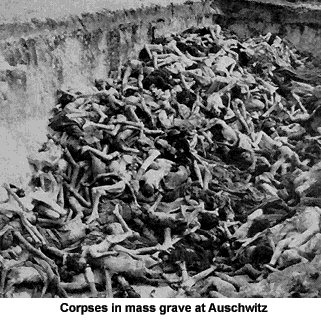
http://www.scrapbookpages.com/AuschwitzScrapbook/Tour/Auschwitz1/Auschwitz08.html
http://en.wikipedia.org/wiki/Auschwitz_concentration_camp
http://simplethinking.com/home/auschwitz_1.htm
http://en.wikipedia.org/wiki/Auschwitz_concentration_camp#Auschwitz_I
https://blogger.googleusercontent.com/img/b/R29vZ2xl/AVvXsEg6LnijHxwJ-c-5U0u9WaBJTOyhIgcVWv9S-jEw8L26qA-c6RWLIZwy0nVUHO9M-CkAiZ2aRvr-7Co6zcb6a2erj7VlofK8ngxZx4eqniILc1_3D4LbFINXCyA-xgTm8SxoA6-OiaOdJ-I/s320/Elie+Wiesel+Buchenwald+Concentration+Camp+Holocaust+Survivor.jpg
RESEARCH- Auschwitz III

Here is the final part of Auschwitz, Auschwutz III (a.k.a Monowitz, which was a labor camp, and the largest camp in Auschwitz). 11,000 slave laborers worked at Monowitz. 7,000 inmates worked at various chemical plants and 8,000 worked in mines. Approximately 40,000 prisoners worked in slave labor camps at Auschwitz or nearby. Doctors from Auschwitz II would visit the work camps quite often and select the weak and sick for the gas chambers of Birkenau, (if you don't remember from my last post, Birkenau was the second camp), so many were literally working for their lives under terrible conditions.
The prisoners' day began at 4:30 a.m. with roll call, with 30 minutes allowed for morning ablutions. After roll call, the Kommando, or work details, would walk to their place of work. Often the prisoners would be wearing no more than five striped camp fatigues, no underwear, and wooden shoes without socks, which were not properly fitted and caused great pain. An orchestra often played as the workers marched through the gates. Kapos (remember them from my last blog post?) were responsible for the prisoners' behavior while they worked, and so was an SS escort. The working day lasted 12 hours during the summer, and a little less in the winter. There were no rest periods were allowed. One prisoner would be assigned to the bathrooms to measure the time the workers spent in there. They weren't allowed to spend much time in the bathroom at all. After work, there was an evening roll call. If a prisoner was missing, the others had to remain standing in place until he was either found or the reason for his absence discovered, even if it took hours, even in the freezing cold or burning heat. After roll call, there were punishments, depending on what had happened during the day. After these, the prisoners were allowed to go to their blocks for the night to receive their bread rations and water. Curfew was two or three hours later, the prisoners sleeping in long rows of wooden bunks, lying in and on their clothes and shoes to prevent them from being stolen. (The picture at the beginning of this post shows this. The man circled in red is Elie Wiesel. This was taken at a different concentration camp he spent time in called Buchenwald.)
Subscribe to:
Posts (Atom)